We spend more on the body than on anything else we own — feeding it, dressing it, photographing it, fighting its age. And Scripture opens its account of the body with what sounds like an insult:
“Then the Lord God formed a man from the dust of the ground and breathed into his nostrils the breath of life, and the man became a living being.” — Genesis 2:7 (NIV)
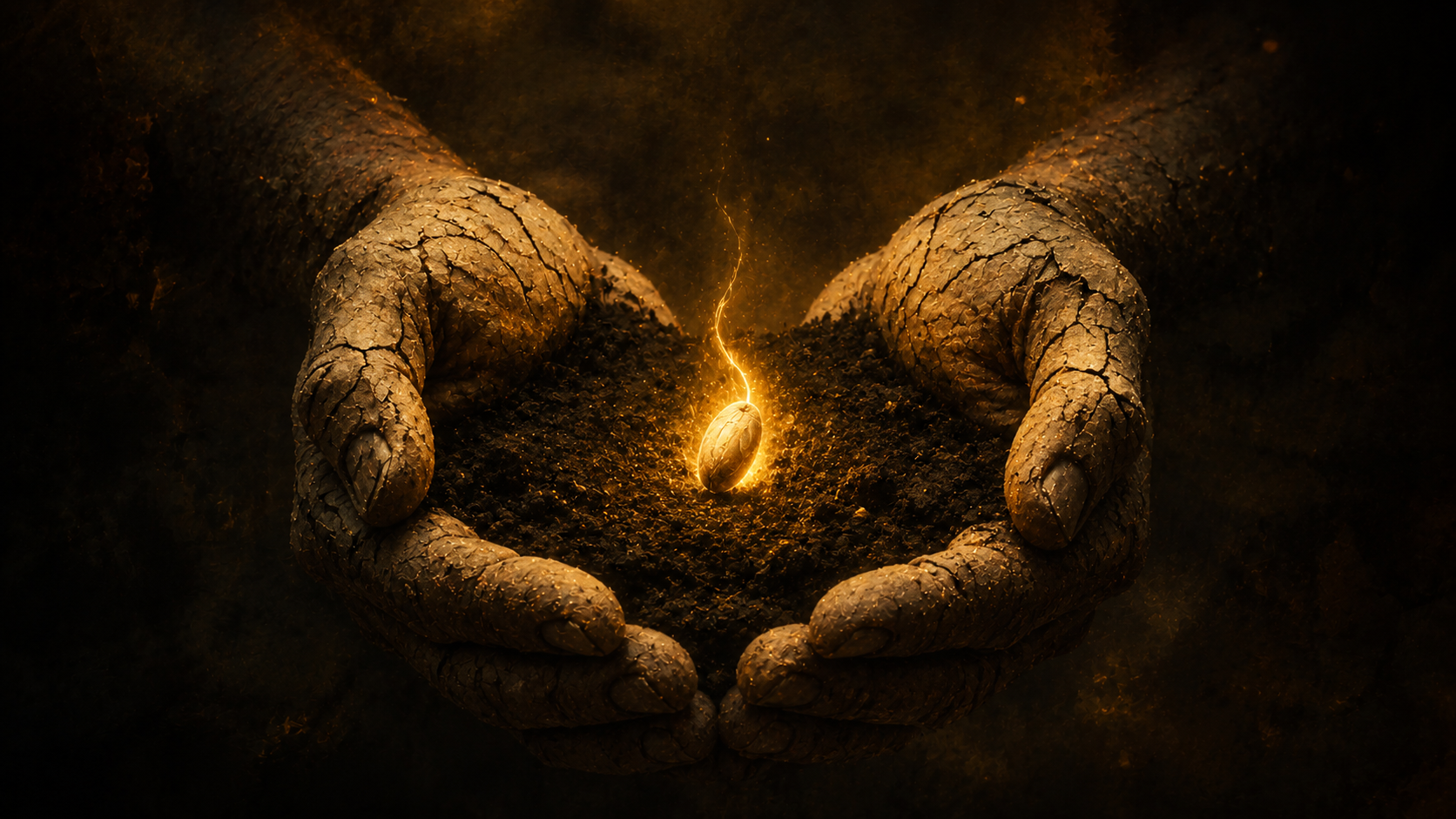
Dust. Not marble, not gold — the cheapest, most common thing on earth. In the whole series so far, we’ve seen that your spirit is God’s breath in you and your soul is the you between two worlds. So what is the body? Dust. But before you’re offended, remember what dust is actually for.
Just Dust — and That’s the Point
Soil has no value of its own. Nobody frames it, nobody treasures it. But soil has one glory that gold will never have: things grow in it. Soil is where seed is planted. It absorbs whatever falls on it — rain or filth, wheat or weeds — and whatever is planted in it, it faithfully grows.
That is your body. In itself, a handful of ground on its way back to the ground (Ecclesiastes 12:7). But God never meant it to be the treasure — He meant it to be the field. The question of your whole life is not how the field looks. It’s what’s being planted in it.
The Mold That Prints an Image
Here is what the field is growing:
“The first man was of the dust of the earth; the second man is of heaven… And just as we have borne the image of the earthly man, so shall we bear the image of the heavenly man.” — 1 Corinthians 15:47, 49 (NIV)
An image. Think of the body as a mold — a press that stamps out an inner form, day after day. Every habit feeds it. Every appetite widens it. Every hour of attention pours something into it. Live by the flesh — senses out, world in — and the mold is quietly printing one kind of image; Scripture is blunt enough to call it the image of a beast, the self that rages and craves and devours. Live by the spirit, and the same mold prints another image: Christ being formed in you.
And here is the sobering part: when you die, the mold falls away. The dust returns to dust — and the image is all that remains. The body is temporary; what it printed is forever. That is why the body, worthless in itself, is the most consequential tool you own.
Three Cracks the World Pours Through
If the body is soil that absorbs anything, then what’s being poured on it matters. John names the three channels precisely:
“For everything in the world — the lust of the flesh, the lust of the eyes, and the pride of life — comes not from the Father but from the world.” — 1 John 2:16 (NIV)
Watch how they chain together. The eyes catch on something — the coat, the car, the house, someone else’s marriage — and the body is bound to it, hauled along like an ox on a rope. Then the pride of life starts the film in your head: if I just had that, if he would just change, then I’d be happy — a mirage, an oasis that isn’t there. And then the flesh gets moving, chasing it — often with God’s name attached to the prayer. But the verse is merciless: none of it comes from the Father. You can pray at a mirage for years and call it faith.
The cure isn’t shutting your eyes harder. It’s opening the other eyes — because everything the mirage promises, the Father has already given, finished, in the kingdom Christ brought into your spirit. Not “will give someday.” Has given. The eye that sees that stops being hungry.
When the Blow Splits the Ground
Now the part everyone knows and no one understands. Someone — usually the person closest to you — says one word, strikes one spot, and the ground of you splits open. Out comes a voice you didn’t plan: the fury, the cursing, the twenty-year-old grievance, word for word. Perfect timing, same spot, every time. Where did that come from?
It came from the field. Things were planted in your dust long before you believed — wounds, verdicts, sins, the world’s whole vocabulary — and they’re still buried there, wired like buttons. The blow didn’t create the eruption; it only opened the ground and showed you what was growing.
So here is the strangest, most freeing instruction: when it splits open, don’t rush to be shocked, and don’t drown in shame. Watch. Stand back like a spectator at your own eruption and say: so that was in there. That’s what I’ve been carrying toward heaven. The blow you hated just did you a favor — it showed you exactly where the next seed goes.

Sow Into the Furrow
Because a split in the ground is, to a farmer, not a wound. It’s a furrow.
“The body that is sown is perishable, it is raised imperishable; it is sown in dishonor, it is raised in glory; it is sown in weakness, it is raised in power.” — 1 Corinthians 15:42–43 (NIV)
So sow. The next time the same spot tears open and the old filth surfaces, take that exact place to the Lord in your spirit and plant something in it — out loud: “Father, so this was still in me. Thank You that You nailed it to the cross. Into this wound I sow gratitude. I sow praise. I sow Your finished work.” Sow it every time the ground opens. This is not positive thinking; it is farming — and fields answer to seed, not to intentions.
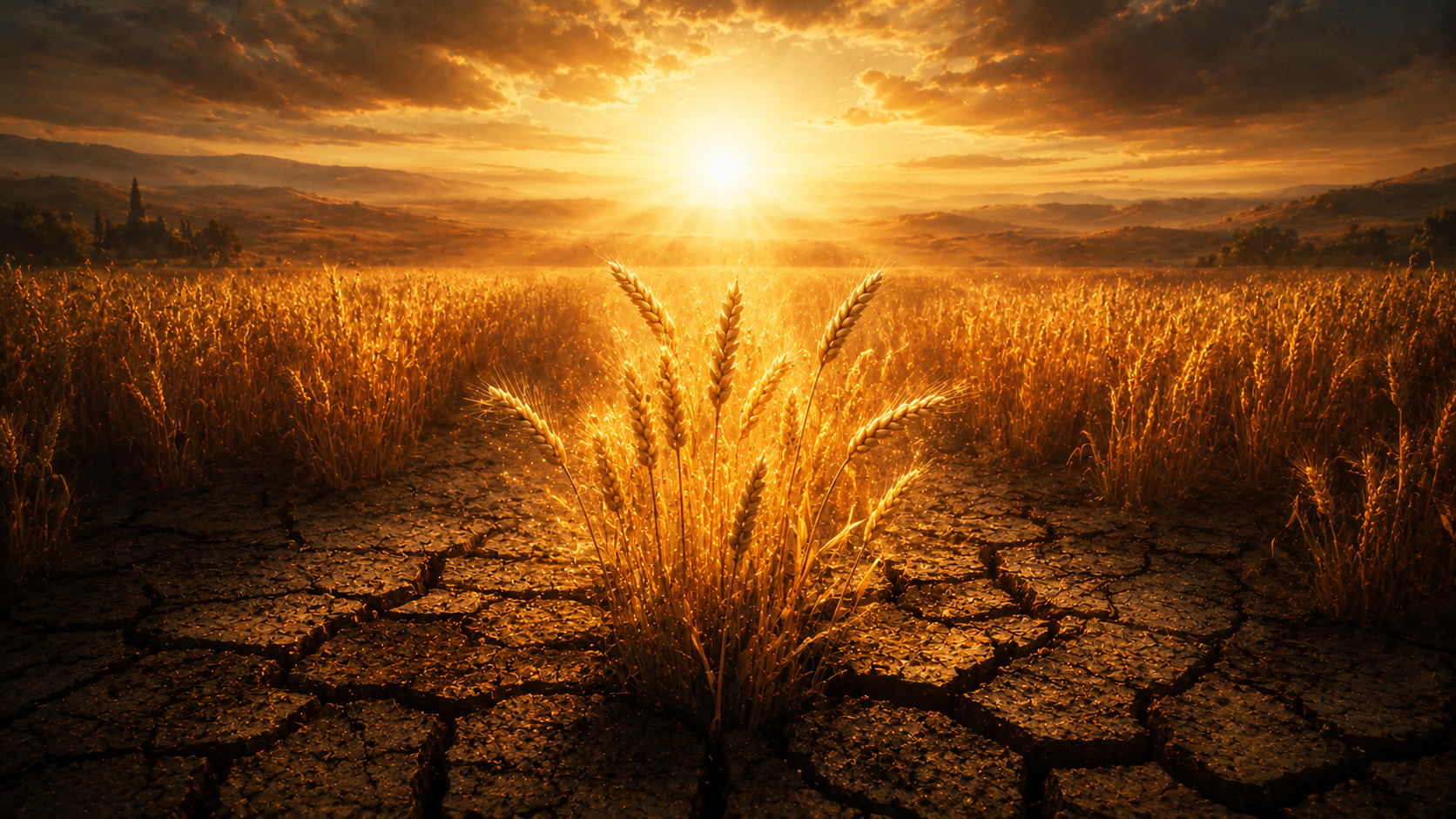
Slowly, the harvest changes. The same blow lands — and what rises isn’t venom but thanksgiving. You haven’t performed a new personality; the field is simply growing what’s now planted in it. And the people nearest you notice before you do. That’s the real test of the whole series, and it’s worth asking someone brave enough to answer: when you’re with me — what do you meet?
“You are not your own; you were bought at a price. Therefore honor God with your bodies.” — 1 Corinthians 6:19–20 (NIV)
Dust, honored with the highest calling dust ever received: to grow heaven’s image in an earthen field, until eyes, mouth, and hands all carry the family likeness of the Father.
Reflection
Sit quietly with this for a few minutes. Think of the last time you split open — one sentence from your spouse, a certain tone from your child, a name lighting up your phone. What came out of you in that moment? That eruption is not proof your faith has failed. It’s a map: it shows you exactly where something is still buried, and exactly where the next seed belongs.
So try it concretely this week. When that same spot tears open again — (1) pause; the person in front of you is not the real battle. (2) Look at what just surfaced and name it honestly: “So this was still in me.” (3) Then, right there, plant a seed out loud: “Thank You, Jesus — You nailed this to the cross. I sow gratitude here.” It will feel awkward, even fake, the first few times — planting day always looks like nothing happened. But keep sowing into the same crack, and one day the same blow will land and thanksgiving will come up where the venom used to be. Then ask the question that matters most: what image is my body printing — and is it the one I’ll be glad to carry into eternity?
“Father, I’ve resented this dust — its weakness, its eruptions, its buried things. Thank You that You made it a field. Where the blows keep landing, I stop cursing the ground and start sowing: thank You, Jesus, for the cross; thank You that what was in me was nailed there. Grow Your image in me, until the people closest to me meet You when they meet me. In Jesus’ name, amen.”



Comments